
BREAKING: The Department of Homeland Security has released the final public charge rule. View the latest updates here.

Our Impact
Thanks to our partnerships with other advocates and the generous support that we've has received from funders, the PIF Coalition has been able to connect with communities across the country to advocate for equal access to benefits for all.

100+ organizations funded
Over the past 5 years, PIF has funded over 100 local, state, and national organizations to support their work.
6 state coalitions
PIF coalitions have formed in 6 states: California, Florida, Illinois, Massachusetts, Michigan, and Texas. State coalitions work together to further advocacy both in their state and nationally.
200,000 comments
During the 2017-2020 Trump Administration, we led a record-breaking public comment campaign opposing a radical expansion of public charge policy.
$2 million+ subgranted
With the generous support of donors, we’ve been able to subgrant over $2 million dollars to support organizations across the country.
44 states represented
Our membership includes organizations across 44 states, plus DC. We engage our membership to collective share knowledge and support each others’ campaigns.
Advocating as a Coalition
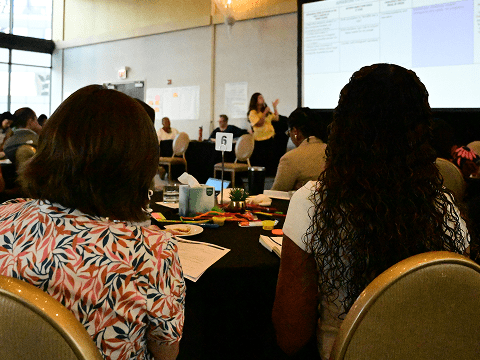
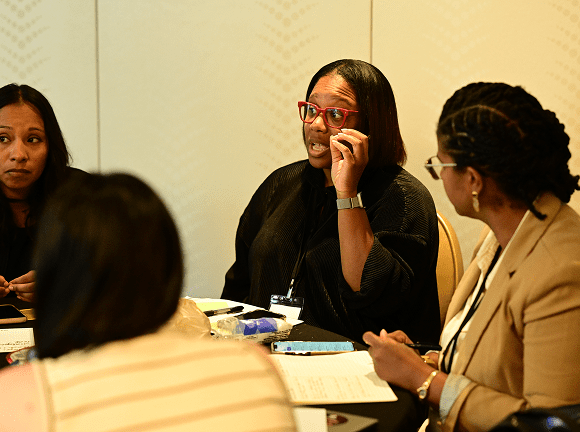
Over the past years, PIF Coalition's track record has proven how successful our "silo-busting" model of advocacy is.
We are excited to continue our work with the strong foundation we need to accomplish our goals, and we look forward to working with you all to continue developing the projects we’re working on.
Our Wins
Since PIF's founding in 2017, we've led multiple campaigns and projects that have had a positive impact on immigrant communities and families across the country.
In 2018, Herlinda was serving as a benefits eligibility manager in Texas when she realized that immigration attorneys were giving incomplete advice to clients about enrolling in healthcare, food and other programs. She created a letter for her clients to help inform their immigration attorneys about public charge and public benefits.
In summer 2025, PIF launched the first and second cohorts of our Train-the-Trainer program, designed to to equip frontline staff with the knowledge and tools to support immigrant families in accessing public benefits like Medicaid, SNAP, and others. We received overwhelming interest and wrapped up our English cohort with advocates from 22 states. Our Spanish cohort is currently underway.
In the past 3 years, our coalition has grown by nearly 40%. Because of that, we’ve been able to create and strengthen relationships with new and existing partners, connect PIF partners to each other, develop additional educational materials that are relevant to local communities, and strengthen and expand our advocacy efforts at a local, state, and national level.
From Our Community
-
"Nowhere else in NYC have we seen any information similar to PIF's and which is targeted to French-speaking immigrants. As such, the impact of this information's dissemination has been very important and highly valued."
 African Services Committee (NYC)
-
"With support from PIF ... COPAL's legislative engagement with community members led to a powerful presence at the Capitol, which helped to secure critical legislative wins for immigrant families in Minnesota, securing driver's licenses for all, access to affordable healthcare, and increased support for ITIN users."
COPAL (MN), National Partner
-
"Through collaboration and partnerships with values-driven PIF members across the country, we are moving closer to ensuring that immigration status is no longer a barrier to healthcare access."
Illinois Coalition for Immigrant and Refugee Rights (IL)

